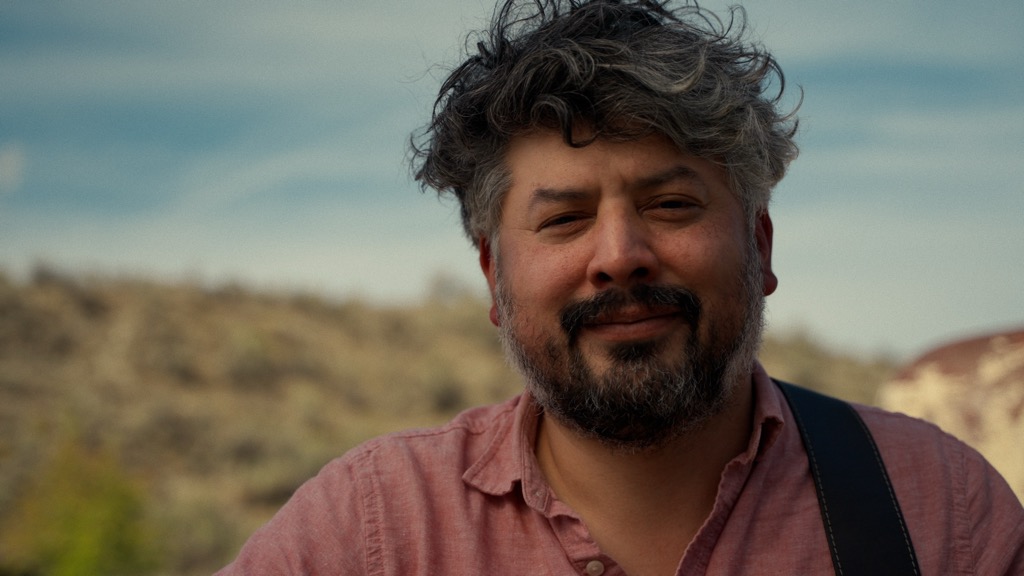
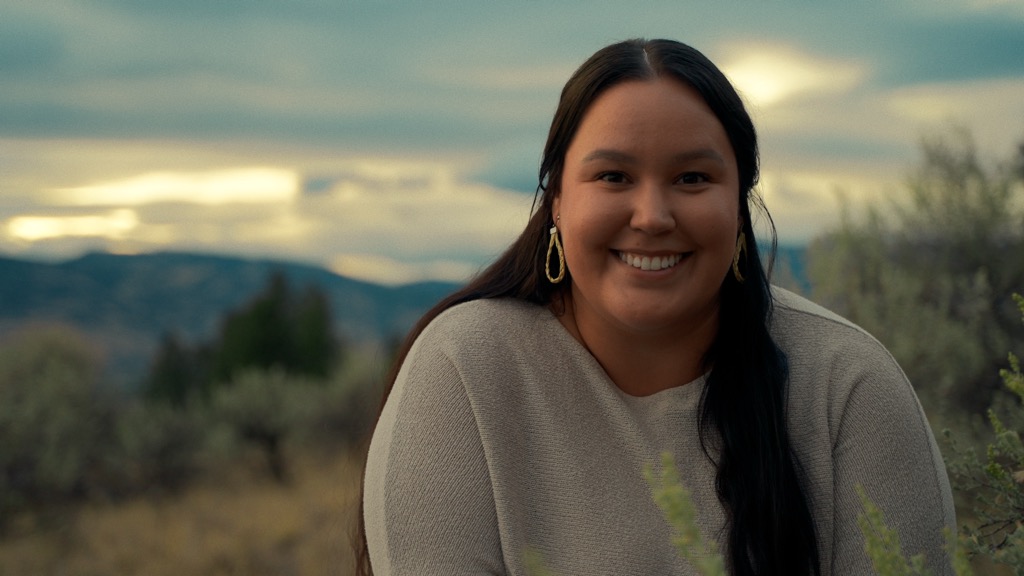
At the very southern end of the Okanagan Valley lies the small community of Osoyoos, nestled among desert sage and blue lakes. Over the last few decades, the community has become a positive story of how to balance traditional values with economic development. From wineries to golf courses, the small nation has attracted tourism while educating outsiders on its culture. Meet Francis and Taylor, two Syilx artists who are inspiring and blazing a trail for the future generations of Osoyoos.
OUR STORYTELLERS
FRANCIS
TAYLOR
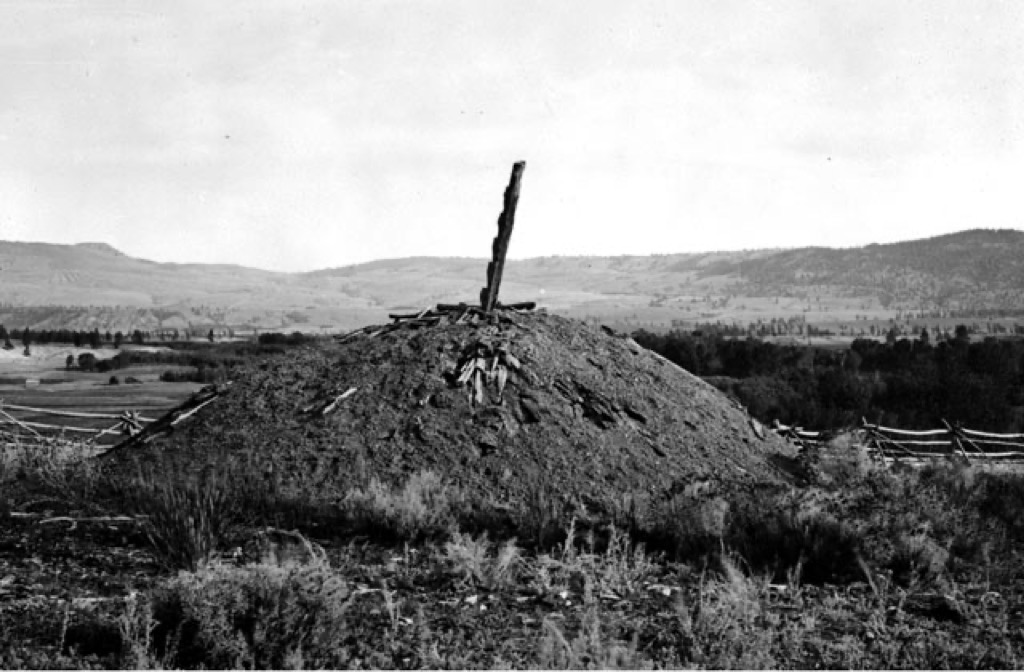
PIT HOUSE Qwa-chi-uh - q ̓ ʷc ̓ iʔ (Syilx)
In British Columbia’s interior, between the Rocky Mountains and Pacific Ranges, the Indigenous peoples of the Okanagan have stewarded the land for thousands of years. With hot summers and moderately cold winters, the Syilx adapted to the local climate and seasons, showing a nuanced understanding of their environment.
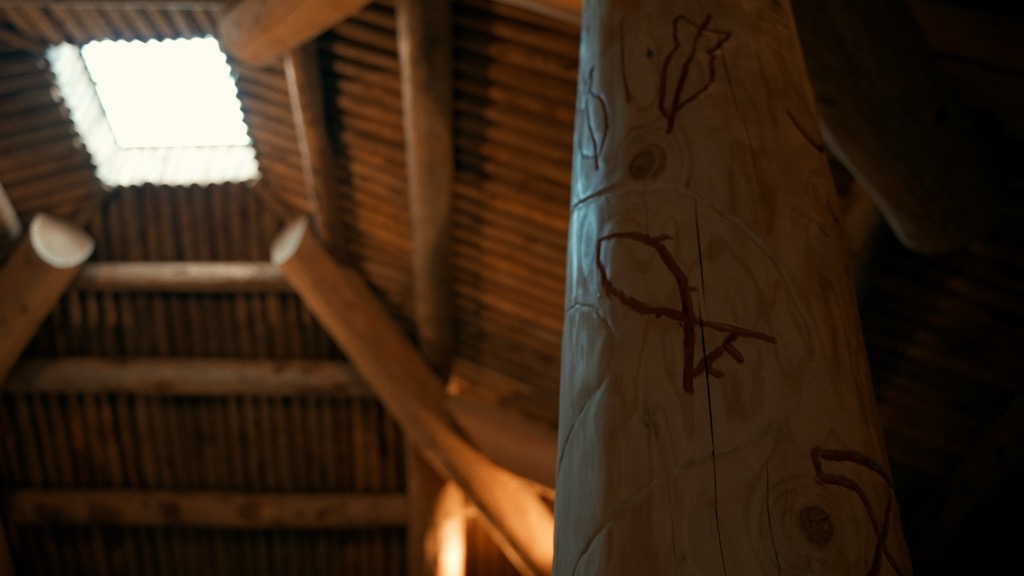
Building on this adaptation, the pit house, or q ̓ ʷc ̓ iʔ (qwa-chi-uh), was a semi-subterranean lodge used by families as a winter shelter. Historically, the Syilx were semi-nomadic, moving through their territory in summer and gathering in pit house villages in winter.
The construction of traditional q ̓ ʷc ̓ iʔ followed a careful process: first, digging a round or oval hole several feet deep; then erecting a sturdy framework of beams in the pit to support a roof of layered poles, brush, and earth. An entrance was dug on one side of the dwelling, while a second hole in the centre of the roof allowed access and ventilation.
During the winter months, families would reside in these dwellings, gathering around the central hearth to cook food, dry meat and fish, and keep warm. Significantly, for the Nlaka’pamux people, the q ̓ ʷc ̓ iʔ was divided into four sections, representing their cosmological view of the world as a huge, circular lodge composed of four compartments.
“Within these houses, families not only sought shelter but also shared
stories, passed down teachings, prepared food, and strengthened kinship ties that
remain central to Syilx culture today.”
Within these houses, families not only sought shelter but also shared stories, passed down teachings, prepared food, and strengthened kinship ties that remain central to Syilx culture today, underscoring the enduring role of the q ̓ ʷc ̓ iʔ in community life.
With the arrival of colonial society in the 1800s, Indigenous peoples were removed from their traditional territories and stripped of their way of life, nearly erasing the use of pit houses. Colonial genocide almost destroyed these cultural practices, but they were not lost to history.
Today, as Indigenous communities across the Okanagan continue to reconnect to and revitalize their traditional culture, the construction and use of pit houses is returning.
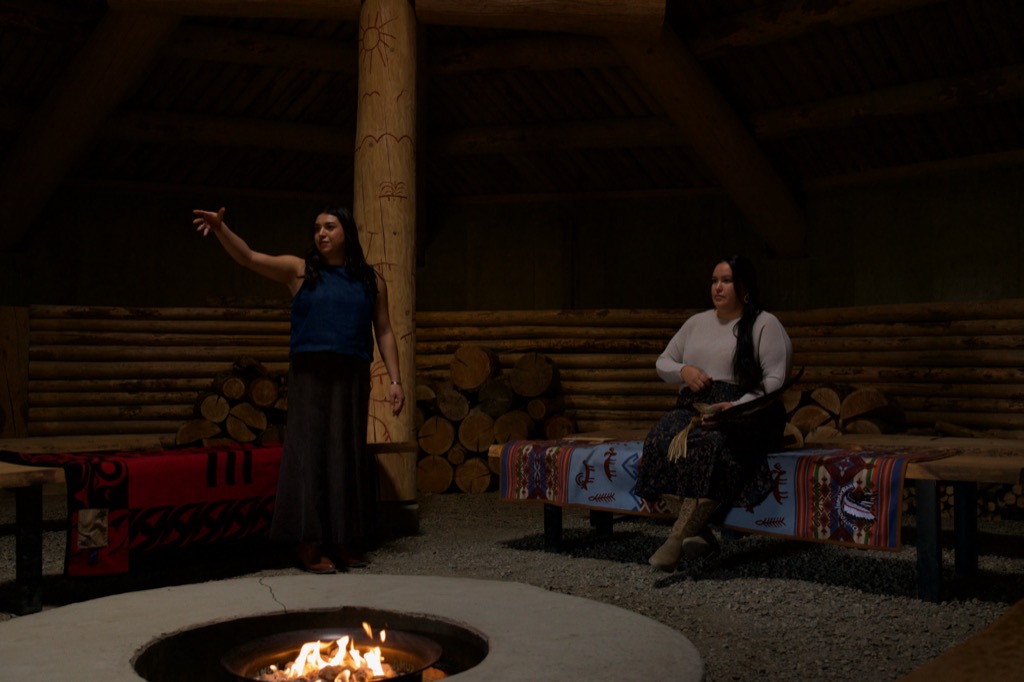
For example, in Osoyoos, the Nk’mip Desert Cultural Centre recently built a full-size pit house made of modern materials to ensure it complies with fire code. Since its construction, it has become a hub for the community, hosting gatherings between chiefs, ceremonies, and youth education activities.
Although pit houses are no longer common dwellings, they retain cultural value as part of traditional knowledge systems. Elders and Indigenous communities across Canada continue to protect and promote these cultural traditions.
CONTACT US
Have a story about your own little big community? Reach out and let us know! We would love to help you tell it.