Little Big Community

3

EPISODE THREE : KITIGAN ZIBI

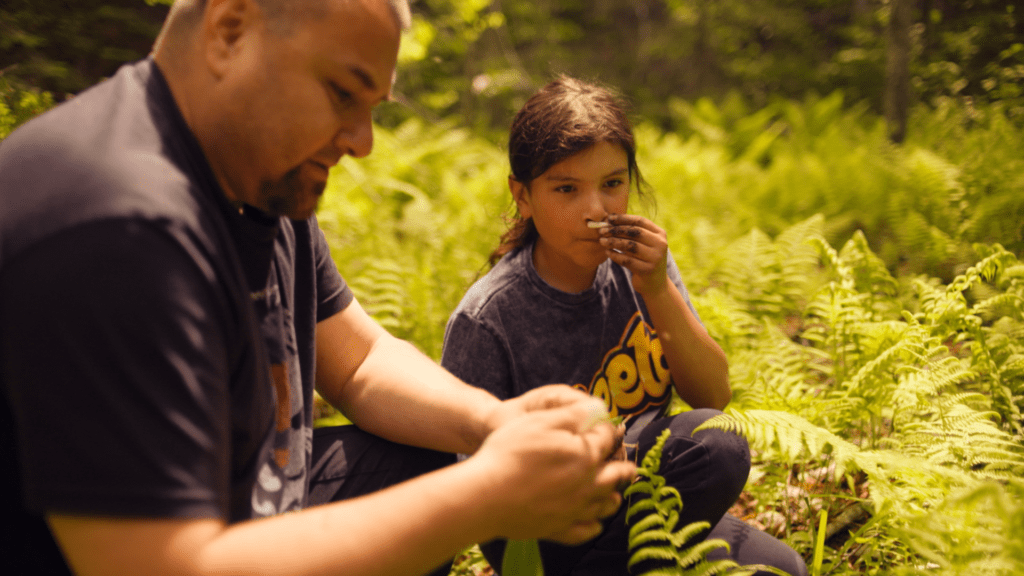
Situated at the confluence of the Désert and Gatineau rivers, Kitigan Zibi Anishinabeg is home to a small, yet vibrant community that has long fostered a strong social fabric. Over the years, its residents have woven together their cultural practices and love of the land into innovative educational programs, focusing on preserving their ancestral traditions. Meet Lisa and Mike, who in their own ways are using their knowledge to protect and educate Kitigan Zibi.


OUR STORYTELLERS

LISA

MIKE

WILD GARLIC
Zhigaagominzh (Ojibwe)

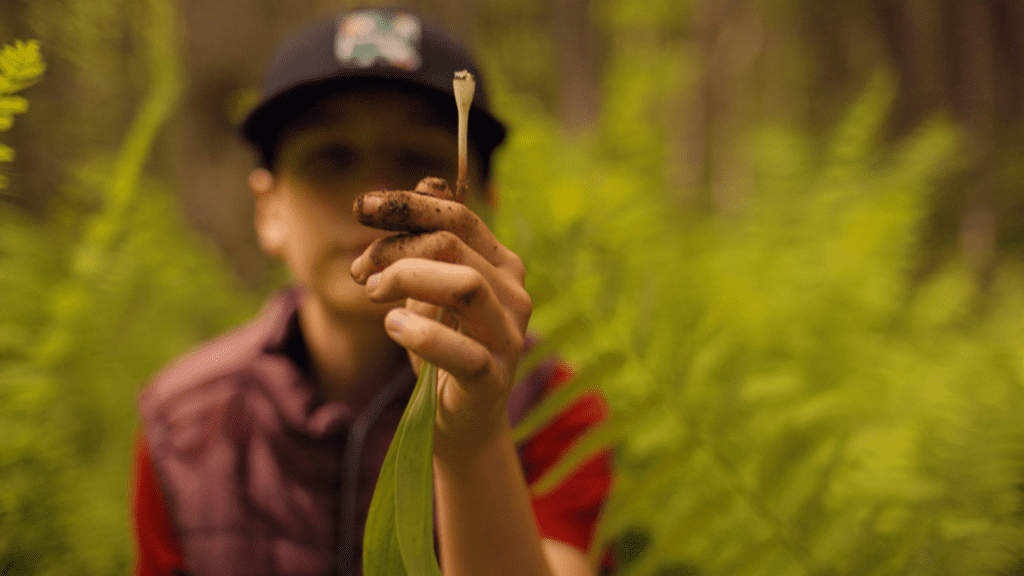
Wild garlic, known in Anishnaabe as zhigaagominzh, meaning skunk bulb, is a plant from the allium genus and closely related to garlic, onions, leeks and chives. Found abundantly across the Eastern Woodlands, including in Kitigan Zibi Anishaabeg, it has forever been an essential food and medicine.

The wild plant has been a staple ingredient for Indigenous people across Turtle Island. Chicago’s namesake comes directly from the Miami–Illinois people’s word for wild garlic, shikaakwa, which the French reinterpreted to chicagoua, thus giving the city its current name.

The flowering plant has a small edible bulb and fragrant green leaves, all of which can be used for various purposes, either cooked or raw. Growing in the underbrush of deciduous forests, it usually sprouts in the spring and early summer from mid-May to late June, growing annually.

The leaves have a fragrant garlic aroma while the bulb has a sweet onion-like flavour, with all parts of the plant used in cooking. In spring, the young shoots can be trimmed to leave the plant intact, acting as a stand-in for green onions.

“The wild plant has been a staple ingredient for Indigenous people across Turtle Island. Chicago’s namesake comes directly from the Miami–Illinois people’s word for wild garlic, shikaakwa, which the French reinterpreted to chicagoua, thus giving the city its current name.”

As the plant matures throughout the summer, it begins to develop buds and flowers called scapes, twisting like pigtails off the top of the plant. Once snapped off the top, they can be used much like asparagus.

As the weather begins to cool in the autumn, the bulb of the wild garlic is ready to be harvested. It can then be used like store-bought garlic by cooking or eating it raw. Leaving the premature bulbs in the ground over the winter will ensure another bountiful harvest the following year.

For the Anisshaabeg, wild garlic also offers many medicinal uses, including using the crushed bulb to offer sting and itch relief from insect bites. Further south, the Cherokee also used the plant as an expectorant and a treatment for asthma and scurvy.

Although many other options for domesticated garlic exist today, continuing to harvest zhigaagominzh provides a delicious alternative for everyday cooking, but also a direct connection to the territory and an insight into the natural world surrounding us.

CONTACT US

Have a story about your own little big community?
Reach out and let us know! We would love to help you tell it.