- ABOUT THE SHOW
- TRAILER
- EPISODES
- CREDITS
- CONTACT
Across the high meadows and vast open prairies of Turtle Island’s Pacific Northwest, a unique wildflower continues to bloom year after year, carpeting the landscape in a vivid purple-lilac hue and ushering in the beginning of summer.
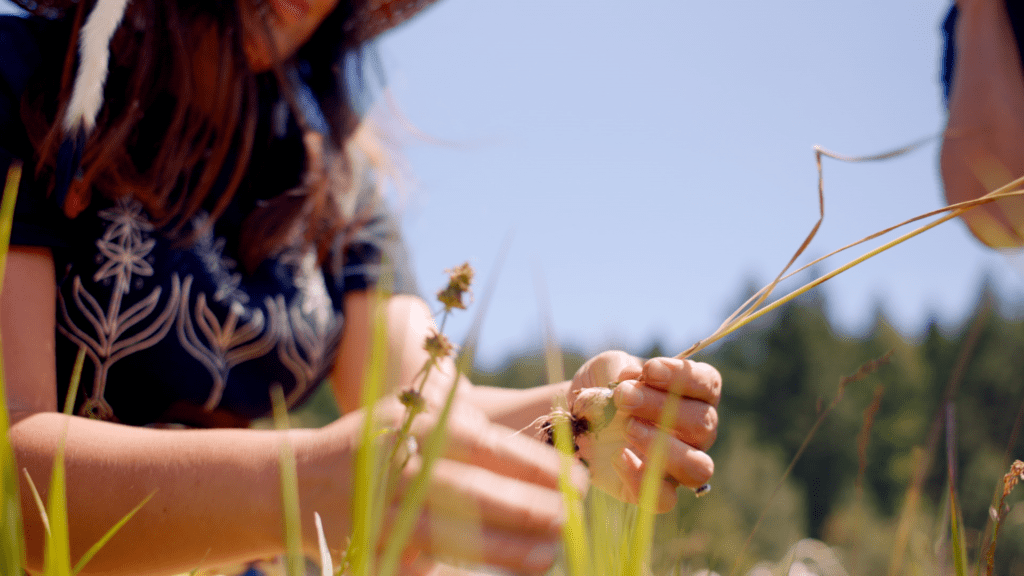
Camas, known in the Séliš language as sx̣ʷeʔlí, is a flowering plant native to North America which has been central to the cosmology, culture and nutrition of local Indigenous people since time immemorial. Wild camas is cultivated for its white bulbous roots, which have a sweet taste similar to that of roasted pear or chestnut.
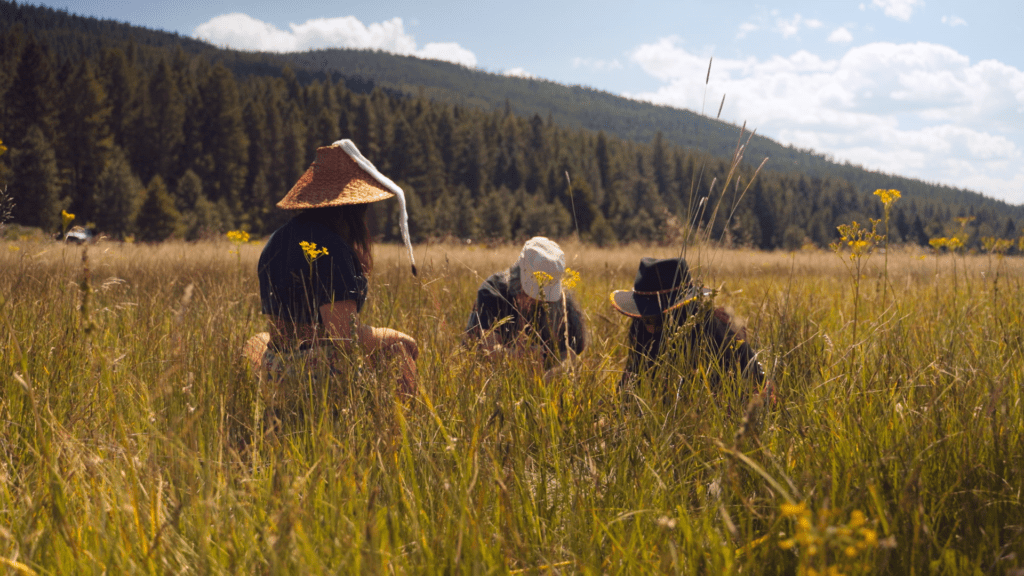
Traditionally, Indigenous peoples harvested camas root in the spring, using an elkhorn digging stick to reach the roots. Once several hundred bulbs were harvested, they would be roasted on fire to eat throughout the year or used to sweeten other foods. Considered an anti-diabetic, it has been a healthy and accessible food staple for thousands of years.
The Indigenous people of the Northwest had a symbiotic and spiritual relationship with the plant, caring for it as it cared for them. Digging for the root would aerate the soil and allow the remaining plants to germinate, while prescribed burns were used to maintain the land, leading to traditionally harvested areas often containing more plants with larger bulbs.
As the United States expanded westwards in the 19th century and European settlers colonized the area, farming and ranching were introduced and many camas fields were destroyed. This robbed Indigenous people of their staple crop and it’s now believed that camas prairies have since shrunk to about 5% of their former size.
Although colonialism disrupted many of these traditional ways of life, Indigenous people across the region are returning to the land and reappropriating the knowledge of their ancestors. Many communities are now launching programs to teach youth about camas and how to harvest it, fostering food sovereignty and a deeper connection to territory.
For many Indigenous nations today, the sx̣ʷeʔlí harvest in the late spring is a time to unite with family, share traditional knowledge and reconnect with the land, all while enjoying the bountiful harvest the land can bring when cared for properly.
Have a story about your own little big community?
Reach out and let us know! We would love to help you tell it.