- ABOUT THE SHOW
- TRAILER
- EPISODES
- CREDITS
- CONTACT
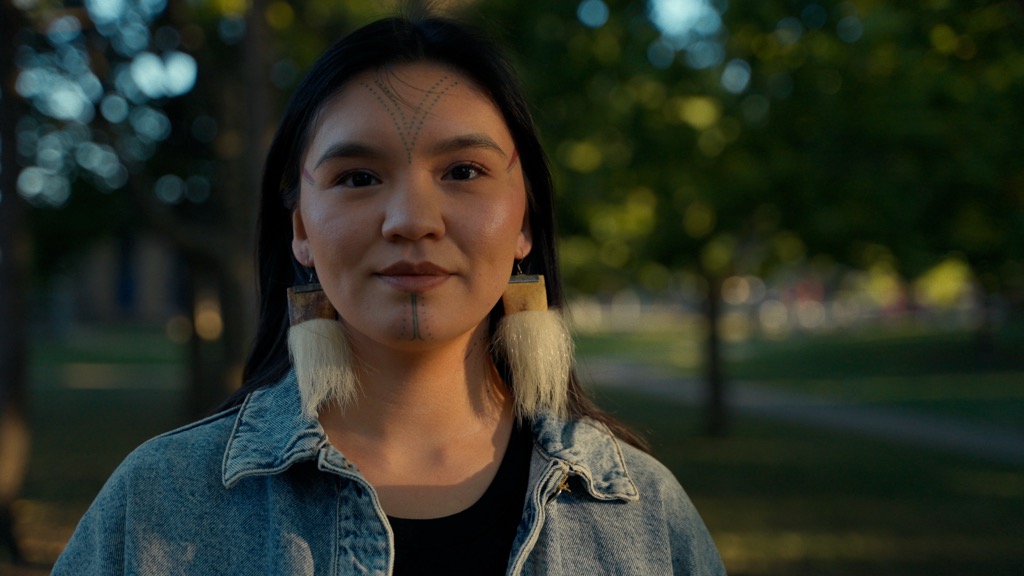
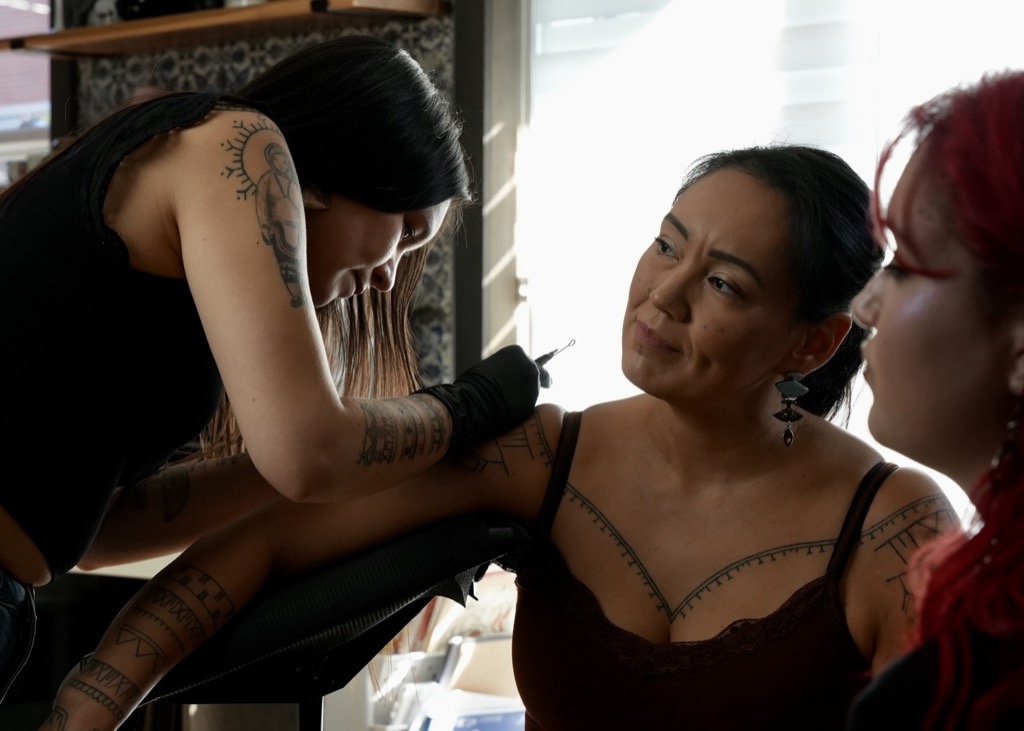
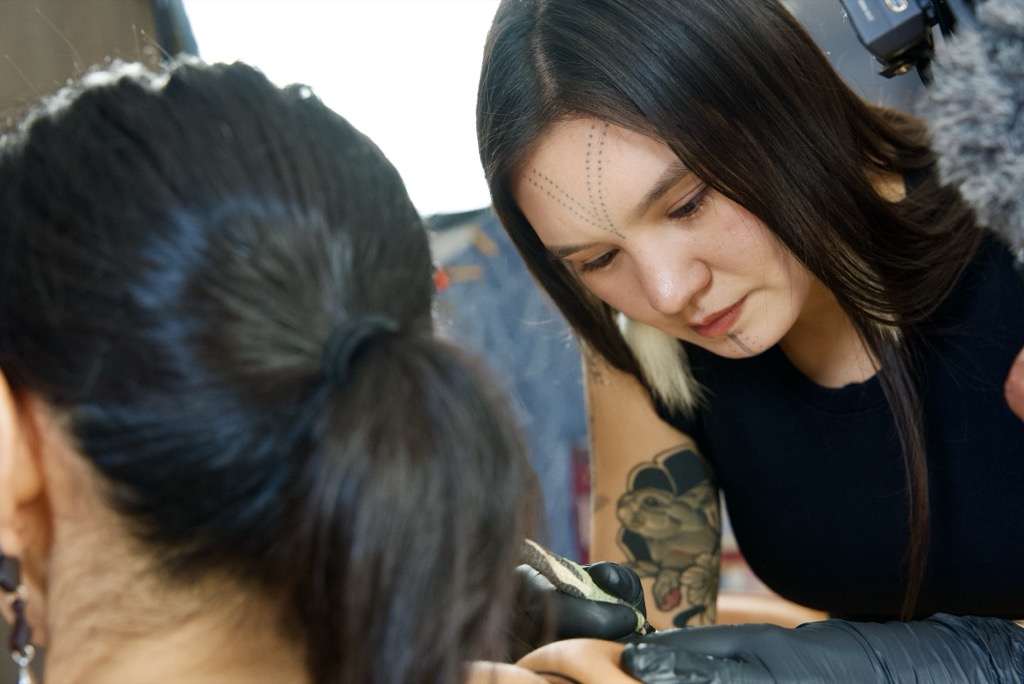
Tiohtià:ke, now known as Montreal, is on the traditional territory of the Kanien’kehá:ka people, but now hosts diverse Indigenous peoples from across Turtle Island. Specifically, the metropolis is now home to the largest Inuit community in Québec, with many coming south to seek education, healthcare, and economic opportunity, fostering a vibrant and supportive community. Meet Arsaniq and Saali, two Inuit artists building meaningful connections with their community by teaching their culture.
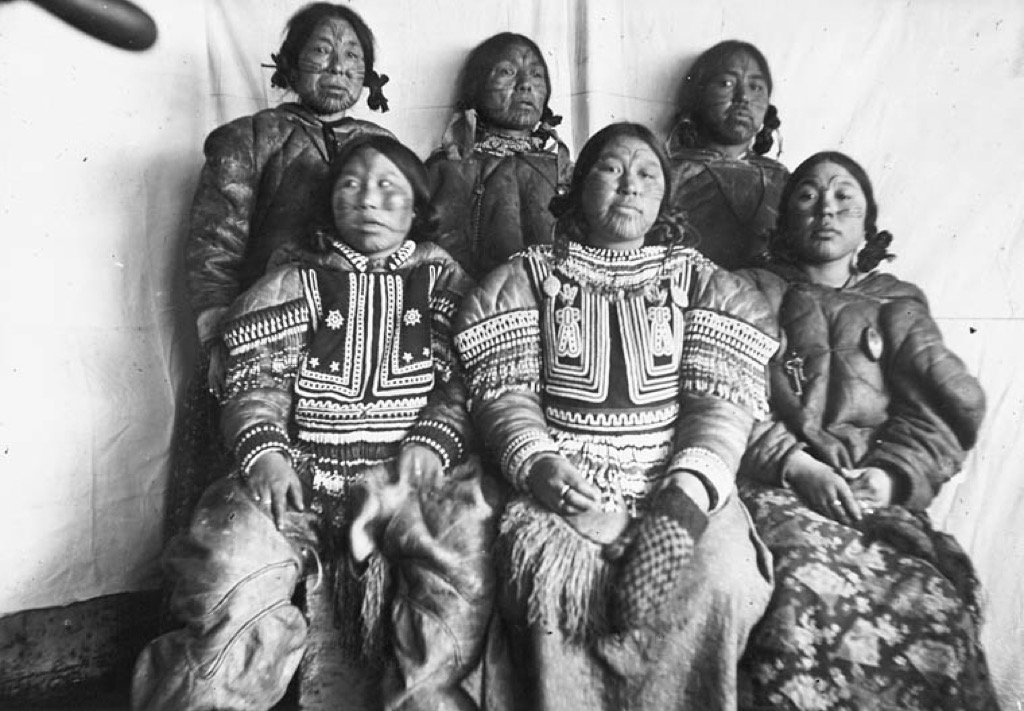
Since time immemorial, kakiniit has been central to Inuit culture across the Arctic and marks an important rite of passage. Kakiniit is the Inuit practice of skin marking and tattooing, almost always performed by women and often as a coming-of-age ritual.
These body and facial markings have deep roots in Inuit history and cosmology, dating back to their creation stories. For instance, in the story of the raven and the loon, the raven tattoos the loon, representing Sedna, creating the loon’s plumage pattern; afterwards, the loon throws soot at the raven, staining it black.
Referencing this story, women across Arctic regions tattoo patterns on their fingers, knuckles, and wrists as a tribute to Sedna, marking the places where her hands were severed to create the animals of the sea that sustain Inuit communities.
While these stories differ among groups, all highlight kakiniit’s deep cultural roots. The word derives from the Proto-Inuit-Yupik root kaki, meaning ‘pierce’ or ‘prick’.
Traditionally, tattooing used caribou sinew threaded over a sharpened bone, along with ink made from soot, tar, and seal fat melted on a qulliq, a traditional oil lamp. Using this method, the tattooer performed skin stitching, sewing the ink-filled sinew beneath the skin in intricate patterns.
Kakiniit was almost always for women, underscoring their connection to Sedna and the spiritual bond between death, creation, and femininity. Designs varied by region, each holding symbolic meaning and serving many purposes.
Tunniit, the facial markings for women, were among the most important. The V-shaped tattoo with the downward point on the forehead, known as siqniq, is a mark of womanhood and the end of childhood, and it was often one of the first tattoos an Inuk woman received, marking the milestone of her first period.
With colonial expansion, Christian missionaries discouraged “shamanistic” practices like kakiniit, which reflected pre-contact lifeways. As settlements and residential schools were established, they banned the practice, deeming it “demonic” and making it taboo among Inuit communities.
Today, many Inuit artists use oral histories and archives to help revive kakiniit, leading to a resurgence, especially among youth.
One such initiative, led by Angela Hovak Johnston, is the Tattoo Revitalization Project. She travelled Arctic regions, giving traditional kakiniit to women in exchange for goods or meals, as practiced before Christian contact.
Although kakiniit was nearly eradicated, it was never lost. Its resurgence strengthens Inuit pride and reaffirms Indigenous sovereignty across the Arctic.

Have a story about your own little big community?
Reach out and let us know! We would love to help you tell it.